Once the pride of Nigerian driveways and a symbol of elegance across the globe, the Mercedes-Benz W124, popularly nicknamed ‘V-Boot’ in Nigeria, recently celebrated its 35th anniversary, marking over three decades of innovation, durability, and iconic design.
A Grand Debut in 1984
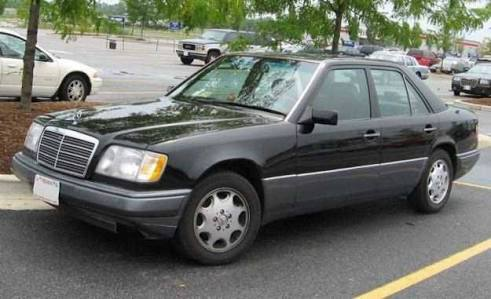
The W124 series was officially unveiled by Mercedes-Benz on November 26, 1984, in Seville, Spain. The model made its market debut in December of that year, introducing a new standard in automotive engineering and comfort for the upper-middle-class segment.
The name ‘V-Boot’ comes from the distinctively shaped rear trunk that resembled the letter “V,” a visual departure from the more boxy trunk designs of earlier Mercedes models. This design language, paired with German engineering, earned the W124 a reputation for reliability and longevity—qualities still associated with it today.
Diverse Model Variants
After the launch of the saloon (W124), the lineup expanded with multiple body styles:
- 1985 – Estate (S124)
- 1987 – Coupé (C124)
- 1989 – Long Wheelbase Saloon (V124)
- 1991 – Cabriolet (A124)
- Chassis models for special use (e.g., ambulances, hearses, and commercial builds)
Each variant brought its own unique charm while maintaining the build quality that defined Mercedes-Benz in that era.
READ MORE: End of Discussion vs Discussion Continues: Which One Should You Buy?
Birth of the E-Class Legacy
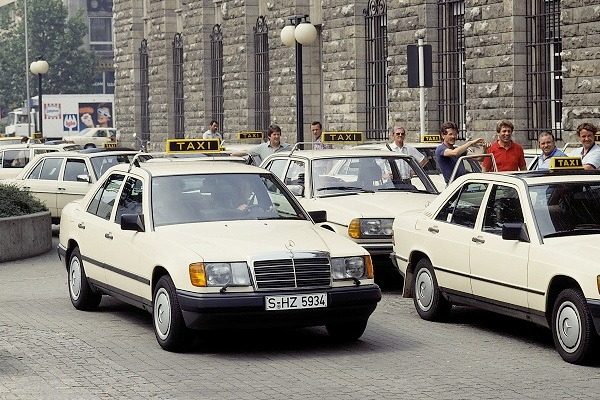
In 1993, the W124 officially transitioned into the E-Class family, becoming the first generation of Mercedes-Benz’s E-Class series. From that point, the W124 wasn’t just a solid luxury car—it became a cornerstone of Mercedes’ brand identity.
Among the most coveted models were the 500 E and 400 E, featuring powerful V8 engines. Built in collaboration with Porsche, these performance variants remain desirable among collectors today. Also of note were the AMG-enhanced versions and the elegant two-door coupé and convertible models, which were prized for their sporty aesthetics.
A Beloved Icon in Nigeria
In Nigeria, the Mercedes-Benz W124 was more than just a car—it was a status symbol. Commonly driven by top executives, politicians, and “big men” of the 80s and 90s, it stood as a testament to taste and success.
Fathers and family men proudly owned this car, often preferring the manual transmission variant for its control and efficiency. In fact, many Nigerian drivers considered the manual gearbox superior for navigating the country’s tough terrains and long-distance journeys.
The V-Boot quickly became known for its ruggedness, balance, and resistance to bad roads, earning it a nickname as a “road warrior”—a vehicle you could trust no matter the distance or destination.
Built to Last
One of the reasons the W124 remains a legend is its engineering. From multi-link rear suspension to excellent aerodynamics (Cd of 0.28), this model set benchmarks in driving stability and efficiency. Some W124s on Nigerian roads today are still operational, further proving their exceptional longevity.
Even decades later, the V-Boot is still widely praised for:
- Durability
- Mechanical simplicity
- Availability of spare parts
- Classic, timeless design
Conclusion: More Than Just a Car
As the Mercedes-Benz W124 celebrates 35 years, it’s not just a look back at a car model but a celebration of heritage, innovation, and automotive excellence. For many, it’s a nostalgic symbol of the good old days; for others, it’s still a practical and reliable vehicle that commands respect.
Whether you call it the V-Boot, the W124, or the original E-Class, one thing remains certain—this is a car that redefined its era and continues to leave a mark even decades after its production ended.
