Madam Efunroye Tinubu was not just a powerful woman in Nigeria’s history—she was a political strategist, a pioneering entrepreneur, and a fearless leader whose impact shaped Lagos, Abeokuta, and the West African trade system. Best known as the first Nigerian woman to buy a car, she broke gender barriers long before feminism became a movement in Nigeria.
This biography explores Madam Tinubu’s early life, rise in commerce, involvement in the slave trade, political influence, exile, legacy, and the facts behind her groundbreaking car purchase.
Table of Contents
- Early Life and Family Background
- Rise in Trade, Wealth & the Slave Economy
- Transition to Commodity Trading
- First Nigerian Woman to Buy a Car
- Marriages, Political Alliances & Influence
- Conflict with the British & Exile
- Return to Abeokuta and Rise as Iyalode
- Legacy, Impact & Memorials
- FAQs
- FAQ Schema
Early Life and Background
Madam Efunroye Tinubu was born around 1805 in Abeokuta, in present-day Ogun State, Nigeria. Born into a Yoruba family, she grew up in a period of intense regional trade activity. Though her beginnings were modest, her intelligence, charisma, and sharp business instincts propelled her into becoming one of the wealthiest and most influential women in 19th-century West Africa.
Her early experiences and exposure to inter-ethnic trade laid the foundation for a powerful career that would redefine the limits of female leadership in Nigeria.
Her Role in the Slave and Commodity Trade
Participation in the Trans-Atlantic and Regional Slave Trade
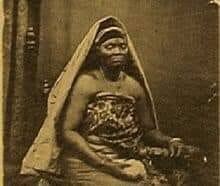
In her early years, Nigeria’s pre-colonial economy was deeply connected to the slave trade, which was still legal and widely practiced.
Madam Tinubu became one of the most prominent slave traders in the region, trading slaves from Yoruba hinterlands in exchange for:
- Salt
- Tobacco
- Firearms
- Cloth
- Alcohol
At her peak, she reportedly owned over 300 slaves, a testament to her wealth and commercial influence.
READ MORE: Why Does NEPA Take Light When it Rains in Nigeria?
Transition After Abolition
When European powers began enforcing the abolition of the slave trade, Tinubu successfully pivoted to other commodities, such as:
| Trade Goods | Economic Importance |
|---|---|
| Palm oil | Export boom commodity |
| Tobacco | High regional demand |
| Kola nuts | Yoruba regional trade |
| Textiles | European-African exchange |
This shift ensured she remained powerful despite political shifts and changing trade rules.
The First Nigerian Woman to Buy a Car
One of the most intriguing facts about Madam Tinubu is her position as the first Nigerian woman to own a car, reportedly around 1834.
While cars as we know them today were not yet widely produced, this “car” was likely an early European-imported automobile or mechanical carriage.
How She Acquired the Car
Historical accounts state she exchanged about 500 slaves for the vehicle, highlighting:
- Her immense wealth
- Her direct access to European merchants
- Her willingness to adopt new technologies early
Why She Never Drove the Car
Madam Tinubu did not drive the car herself. Instead:
- She leased it to European colonial officials,
- Turning it into a business asset, not a luxury item.
Her decision demonstrated strategic financial intelligence and an understanding of how to extract value from foreign technology.
It would be nearly a century later before Funmilayo Ransome-Kuti became the first Nigerian woman to actually drive a car.
Her Marriages and Political Influence
Madam Tinubu was married multiple times, but her most politically significant marriage was to Oba Adele Ajosun, the exiled Oba of Lagos.
Rise to Lagos Power Circles
When Adele regained the throne in 1835, Tinubu moved with him to Lagos. After his death in 1837:
- She influenced the installation of Oluwole, Adele’s son, as Oba of Lagos.
- She continued to influence politics even after his reign.
- She later married Oluwole’s military adviser, further cementing her political leverage.
Her Role as a Kingmaker
She used her wealth and alliances to influence:
- Royal succession
- Trade policies
- Political decisions in Lagos and Abeokuta
Her home became a hub of strategy, diplomacy, and influence.
Rise, Conflict, and Exile from Lagos
Madam Tinubu’s power eventually put her on a collision course with British colonial officials, especially Consul Benjamin Campbell.
She was accused of:
- Continuing the slave trade secretly
- Plotting to undermine British control
- Exercising too much influence over local rulers
These tensions escalated, and she was eventually exiled from Lagos by British authorities.
Return to Abeokuta & Appointment as Iyalode
Upon returning to Abeokuta, she remained a respected figure. The Egba people honored her by making her the first Iyalode of Egbaland—a prestigious title reserved for women of exceptional leadership and influence.
As Iyalode, she:
- Advocated for women’s interests
- Advised the Alake and chiefs
- Played key roles in defending Abeokuta during conflicts
Legacy, Influence & Death
Madam Tinubu died in 1887 at the age of 82. Her legacy remains complex—marked by both impressive leadership and controversial involvement in the slave trade.
Key Aspects of Her Legacy
- First Nigerian woman to purchase a car
- One of Africa’s most powerful female traders
- Influential political actor and kingmaker
- First Iyalode of Egbaland
- Defender of indigenous autonomy during colonial encroachment
Monuments and Memorials
Her memory lives on through:
| Landmark / Honor | Location |
|---|---|
| Tinubu Square | Lagos Island |
| Schools named after her | Lagos, Ogun |
| Streets & community centers | Across Southwest Nigeria |
Frequently Asked Questions
1. Was Madam Tinubu truly the first Nigerian woman to buy a car?
Yes. Historical accounts credit her as the first Nigerian woman to own a car, or more accurately, an early imported mechanical automobile or carriage. Her acquisition in 1834 reflects her immense wealth and pioneering role in technology adoption.
2. Why didn’t Madam Tinubu drive the car herself?
Driving was not a common activity in early 19th-century Nigeria, especially for women. Tinubu instead leased the car to colonial officials for profit, demonstrating her business acumen.
3. What is Madam Tinubu remembered for today?
She is remembered for:
Her status as a pioneering Nigerian woman in leadership and business
Her political influence in Lagos and Abeokuta
Her success in commerce
Her role as Iyalode of Egbaland
Her advocacy during colonial intrusion
