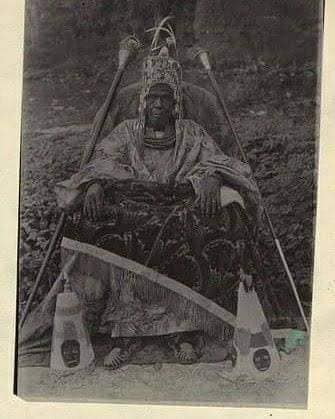
Oba-Ile town, located in Osun State, is one of the oldest and most historically significant towns in Yorubaland. Its story dates back centuries and is deeply intertwined with the origins of the Yoruba people and their sacred traditions.
The Founding of Oba-Ile
Historical records trace the founding of Oba-Ile to the 12th century by Oduyale, a son of the legendary Oduduwa, who is often regarded as the progenitor of the Yoruba race. Oduyale was a sibling to the rulers of Ile-Ife, including the Alaafin and Olufon Ade.
Oduyale was not just royalty; he was also an Ifa Oracle and a master of traditional medicine, which in those times was a source of immense power. His wisdom and spiritual abilities made him highly respected, but like many great figures, he faced personal challenges.
The Role of Obedu, the Mysterious Guardian
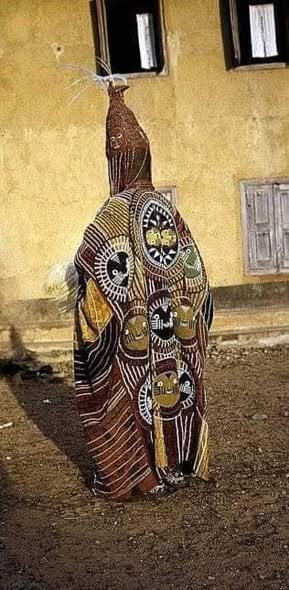
Oduyale had a close friend named Obedu, a figure shrouded in mystery and often referred to as “Obedu Olowu Oro Ife.” Obedu was believed to possess extraordinary magical powers and was older than Oduyale himself, existing from the earliest days of Ile-Ife. Many accounts describe him as a “demon” or spiritual warrior, yet he was a protector and advisor to Oduyale.
When Oduyale faced difficulties with bearing children—a source of great distress—he sought guidance from Obedu. The advice he received was firm: he must leave Ile-Ife to find a place where he could successfully raise a family. At first, Oduyale was reluctant, but Obedu’s messenger, Jenya, delivered a warning that he must obey or remain childless.
The Journey to Oba-Ile
Following Obedu’s guidance, Oduyale prepared to leave Ile-Ife. Before departing, his father, Oduduwa, entrusted him with symbolic items to confirm his royal identity:
- Beaded Crown (Ade)
- Iron Walking Stick (Opaga)
- Heavy Iron Rod (Oduro)
- Magical Bangle (Jufu)
With Obedu’s blessings and magical powers, Oduyale embarked on his journey, soaring through the sky to a dense forest known as the “Forest of Demons” (Igbo Awon Oro). As he descended, voices exclaimed, “Oba-le o o, Oba-le o o, Oba-le o o”—meaning, “he is landing”—which eventually evolved into the name Oba-Ile. This is why the people of Oba-Ile are called “Oba nja Omo Seloke”, or “descendants from the sky.”
Once he landed, Obedu joined him, and together they settled in the new territory. Eventually, Oduyale returned to Ile-Ife to bring his wife and possessions to Oba-Ile, where he began to flourish and raise his family.
The Legacy of Obedu
Obedu remained a central figure in Oba-Ile’s history. Known for his hunting prowess and spiritual powers, he rarely stayed in the town but maintained constant communication with the Oloba-Obedu, the first king of Oba-Ile. He is described as wearing traditional hunting attire with a chain tied around his waist, moving between the town and the wilderness.
Legend has it that, 110 years after settling, Obedu revealed to the Oloba and town chiefs that he would eventually leave them but would continue to protect the town in times of war. He taught them the ritual of calling him during emergencies: drumming and shouting, “Koriko dide, eruwa dide”—meaning, “let grass rise as soldiers to fight.”
When tested, Obedu appeared as instructed and transformed the grass into soldiers. However, when the soldiers accidentally attacked the townspeople, Obedu felt betrayed and withdrew, leaving only a part of his chain behind. This chain remains today at the Obedu Shrine, a sacred site where only non-indigenes, called “Aworo”, are permitted to perform rituals during the annual Obedu Festival in October.
The Old Oba-Ile and Migrations
The original settlement of Oba-Ile eventually became abandoned due to fear of Obedu and later because of inter-tribal wars, including the Fulani incursions. The people moved to nearby areas such as Adaaso, which became their new settlement, and later spread further to places like Igbo Oloba in Ikirun, Obatedo near Osogbo, Oba-Ile near Akure, Oba-Akoko in Ondo State, and other parts of Yorubaland.
Despite these dispersals, the descendants maintained their connection to the Oloba-Obedu totem, preserving the town’s spiritual and cultural heritage across generations.
The Spiritual Significance of Oloba-Akayedo
In another tradition, Obedu is referred to as Oloba-Akayedo, an ancient title among Yoruba rulers. This school of thought emphasizes his role as a heavenly chief chosen by Olodumare to oversee rituals, traditions, and governance instructions for Ile-Ife. Oloba-Akayedo is said to have descended to earth through a chain, instructing Oduduwa (Olofin-Aye) and other chiefs on where to step, what rituals to perform, and how to interact with the gods.
It is believed that Oloba-Akayedo never died but returned to heaven, leaving behind his beaded crown and ceremonial symbols that are still used by descendants and Oloba-Ile rulers today. The sayings “A ki ri omo Oloba lai dade” (“we cannot see a descendant of Oloba without a beaded crown”) and “Ade Oloba soro isi” (“it is impossible to remove Oloba’s crown without consequences”) reflect this enduring reverence.
Conclusion
Oba-Ile is more than just a town in Osun State; it is a living testament to Yoruba history, spirituality, and resilience. From the mystical journey of Oduyale to the legendary guidance of Obedu, the town’s story is deeply woven into the tapestry of Yorubaland. Visitors to Oba-Ile today can witness sacred shrines, cultural festivals, and remnants of the ancient settlement, making it a fascinating destination for historians, cultural enthusiasts, and travelers alike.