Nature is filled with creatures that make you stop and wonder how they ever survived long enough to be here. Some animals have evolved bizarre behaviors so baffling, diets so impractical, or defense mechanisms so counterproductive that it is hard not to raise an eyebrow. This list rounds up the 20 animals most commonly considered the least intelligent, and explains exactly why each one earned that reputation, with factual context and a fair caveat where science offers one.
Before jumping in, one important note: what looks like “dumb” behavior is often the result of evolutionary pressures that made perfect sense in a different environment or era. That said, the animals below have genuinely puzzling traits, and exploring those traits is both fascinating and entertaining.
Top 20 Dumbest Animals in the World
1. Ostrich
The ostrich holds the record for one of the most remarkable physical contradictions in the animal kingdom, and it starts at the skull.
The ostrich’s eyes are about the size of billiard balls. They take up so much room in the skull that the ostrich’s brain is actually smaller than either one of its eyeballs. This may be why the ostrich, despite its tremendous running speed, is not very good at eluding predators. It tends to run in circles.
Think about that. The organ responsible for every decision the ostrich makes is physically smaller than the things it uses to look around. Each ostrich eye measures about 5 centimeters in diameter, roughly the size of a billiard ball, making it the largest eye of any land animal. Its brain, on the other hand, weighs only about 40 grams.
The famous myth that ostriches bury their heads in the sand is not quite accurate. The reality, however, is not much better. When sensing danger and unable to flee, an ostrich flops flat to the ground and presses its head and neck against the earth in a misguided attempt at camouflage. Against most real predators, this strategy is about as effective as it sounds.
Their social behavior does not help their case either. Ostriches frequently engage in aggressive outbursts toward each other without obvious provocation, and their parenting approach involves regularly leaving nests unattended.
2. Flamingo
The flamingo is one of the most photographed birds on earth, and one of the least cognitively impressive.
Their brains are wired primarily for the basics: eat, avoid being eaten, and reproduce. Problem-solving, social learning, and adaptability are not their strong suits. Their feeding method, which involves plunging their heads upside-down into the water for long periods to filter algae and small invertebrates, leaves them exposed and vulnerable for extended stretches of time.
The iconic one-legged stance, while visually striking, has no widely accepted scientific explanation. Some researchers propose it helps with heat regulation or balance, but neither theory has been conclusively proven, meaning flamingos may simply be standing on one leg for no particularly rational reason.
Perhaps most telling is their lack of habitat flexibility. Flamingos depend almost entirely on specific saline or alkaline environments. When those environments shift or deteriorate, entire flocks collapse. An animal that cannot adapt to change has limited tools for long-term survival.
3. Panda Bear
The giant panda is one of conservation’s most celebrated success stories, which makes what comes next a little uncomfortable to say. From a survival strategy standpoint, the panda has made some very questionable choices over millions of years of evolution.
Pandas are biologically classified under the order Carnivora, the same family as lions and tigers. Yet they have evolved to eat almost exclusively bamboo, a plant so nutritionally poor that a panda must spend up to 14 hours a day eating between 20 and 30 pounds of it just to maintain its energy. Their digestive system was never designed for plant material and struggles to extract what little nutrition bamboo offers.
Their reproductive strategy is similarly baffling. Female pandas are only fertile for 2 to 3 days per year. During that narrow window, males frequently show little to no interest in mating. This combination of an impractical diet, a body designed for something else, and near-indifference to reproduction is why the panda has been teetering on the edge of extinction without human intervention.
4. Turkey
Turkeys have a behavioral quirk that has fueled decades of jokes, and it is genuinely hard to defend.
A widely documented trait called “tonic immobility” or “predator imprint” means that domestic turkeys can fixate on the first moving object they see after hatching, sometimes a human, a boot, or a bucket, and follow it around as though it were their parent. This lack of distinguishing ability points to very limited cognitive processing.
The “star gazing” behavior is even stranger. Turkeys have been observed staring upward at the sky for prolonged periods. This behavior, called tetanic torticollar spasms, is a genuine neurological condition found in some breeds of domestic turkey that causes uncontrollable head tilting and upward gazing. It has given rise to the (exaggerated) urban legend that turkeys drown in the rain because they stare at the sky with their beaks open. While mass drowning by rain is an overstatement, the neurological vulnerability behind the behavior is real enough to make the list.
5. Jerboa
The jerboa, a tiny nocturnal rodent found across Africa and Asia, looks like someone crossed a mouse with a kangaroo and forgot to include the survival instincts.
When threatened, instead of running in a straight line or finding cover, the jerboa leaps erratically in seemingly random directions. While this can briefly confuse a predator, it often puts the jerboa directly in the path of danger rather than away from it.
Males regularly engage in fights with rival males over mates, sometimes sustaining serious injuries or dying in the process, suggesting limited ability to weigh risk against reward. Jerboas also practice coprophagy, consuming their own feces. While this behavior is technically seen in other small rodents as a way to re-extract nutrients, it remains a notable marker of their place near the bottom of the cognitive food chain.
6. Goblin Shark
The goblin shark, sometimes called a “living fossil,” is one of the most ancient-looking creatures in the ocean and one of the least mentally dynamic.
Its hunting strategy is essentially: wait, then lunge. This deep-sea predator hovers passively in the water column until prey drifts close enough, then fires its protrusible jaws forward in a rapid, mechanistic snap. There is no strategic planning, no pattern recognition, no adaptation between encounters. It is pure instinct in its most basic form.
Unlike other sharks that use sophisticated electroreception systems to detect the electrical signals of prey at a distance, the goblin shark relies heavily on smell, a single sense rather than a suite of adapted tools. There is also no observable courtship behavior or mating ritual. Reproduction appears to be an entirely instinctual, context-free process. In terms of behavioral complexity, the goblin shark is about as simple as a large marine creature can be.
7. Sloth
The sloth is not stupid in the traditional sense. But it does occasionally mistake its own arm for a branch and fall out of trees, which is a hard thing to come back from.
Sloths sleep between 15 and 20 hours a day and descend from their trees only about once a week to relieve themselves. This almost complete lack of activity means sloths have very little opportunity to learn, explore, or develop behavioral flexibility. Their metabolic rate is so slow that it can take up to a month to fully digest a single meal.
The falling problem is more common than it should be. Because sloths grip branches with their long curved claws, they can die mid-sleep if they accidentally grip their own limb instead of the tree. It is the kind of fatal mistake that would be hard to explain to the insurance adjuster.
8. Koala
Koalas spend up to 22 hours a day sleeping. They eat eucalyptus leaves that are both toxic and nutritionally poor. And their brain, remarkably, does not even fill their skull.
The perceived laziness of the koala is a strategy for conserving energy when they need it most, to flee a predator, for example. Their digestive system is up to the task, with a caecum nearly six feet long that aids in digesting the fibrous eucalyptus leaves.
That said, koalas have one of the lowest brain-to-body ratios of any mammal, with smooth-surfaced brains associated with less complex thought. Their cognitive limits show up behaviorally too. Koalas have been observed trying to eat leaves printed on paper, demonstrating a genuine inability to distinguish between images and real objects. They also have extreme difficulty adapting to disruptions in their food supply, which is a single plant species with dozens of known toxic compounds.
9. Kakapo
The kakapo is arguably the most endearingly ill-equipped bird on earth, and it is fighting hard not to go extinct, mostly despite its own best efforts.
The total known population of living kākāpō individuals is 235 as of 2026. Known individuals are named, tagged, and confined to four small New Zealand islands, all of which are clear of predators.
Why did things get so dire? Because the kakapo evolved in a predator-free environment and never developed fear responses. When humans introduced rats, cats, and stoats to New Zealand, the kakapo continued doing what it had always done: freeze and rely on camouflage. Against predators that hunt by smell, this was catastrophically ineffective.
The kakapo’s mating system is also unusual. Males boom for hours each night in specially dug bowls, with calls that can travel 3 miles. The breeding season is only triggered every 2 to 4 years by the fruiting of rimu trees. Females often ignore the booming entirely. The population has become male-heavy, with around three males for every two females, making recovery harder. It is a mating system so inefficient it required an international rescue program to prevent total extinction.
10. Cane Toad
The cane toad has one operating principle: if it fits in the mouth, eat it. This includes insects, small mammals, dog food, garbage, and things that can kill it.
Cane toads are notorious for their inability to distinguish between edible and inedible objects, frequently ingesting harmful substances as a result. Their egg-laying habits are equally questionable. Females regularly deposit eggs in entirely unsuitable locations, including roadsides and open fields, exposing their offspring to both weather and traffic.
The males take things even further. They have been widely documented attempting to mate with dead females, dead frogs of other species, and inanimate objects. The drive to reproduce overrides any assessment of whether the target is actually alive, suitable, or even the right species.
11. Norwegian Lemming
The popular myth that lemmings commit mass suicide by jumping off cliffs was largely fabricated by a 1958 Disney documentary, in which filmmakers reportedly pushed the animals off a cliff themselves. The reality, however, is only marginally less disastrous.
When Norwegian lemming populations grow too dense, they migrate in large groups. Upon reaching rivers or lakes, rather than finding a safer crossing point, they attempt to swim across, often in numbers that lead to mass drowning events. This inability to reassess a chosen route in the face of obvious danger is a textbook case of behavioral inflexibility.
Norwegian lemmings also engage in aggressive confrontations with animals far larger than themselves, including cats, birds of prey, and dogs. This boldness is often cited as bravery, but from a pure survival standpoint, it consistently shortens their lifespan without any measurable benefit.
12. Japanese Land Snail
The Japanese land snail, Eobania vermiculata, is slow in every sense of the word. Its locomotion is one of the least efficient movement systems in the animal kingdom, making it perpetually easy prey for a wide range of predators.
Their mating process is particularly notable. Land snails produce and fire “love darts,” calcium-tipped projectiles aimed at potential mates to increase mating success. The problem is that their aim is poor enough that they frequently miss their target entirely, wasting significant energy and biological resources in the process. The combination of glacial movement, minimal sensory awareness, and unreliable reproductive targeting makes the Japanese land snail a reliable fixture on lists like this one.
13. Slow Loris
The slow loris is the only venomous primate in the world, which sounds impressive until you realize how it delivers that venom.
The slow loris licks a toxic secretion from glands near its elbows and applies it to its fur, or bites predators after coating its teeth with the same substance. The issue is that the venom can cause severe allergic reactions in predators, but it is dangerous to the loris itself if ingested or if the wound becomes infected, which happens.
Its primary defensive instinct when threatened is to freeze completely. In a forest full of predators that use smell and sound to hunt, freezing in place is not an especially effective strategy. The slow loris also lacks the tool use, social learning, and problem-solving behaviors seen in other primates, making it one of the cognitively simpler members of its order.
14. Northern Fulmar Chick
The northern fulmar chick has a defense mechanism that manages to be simultaneously effective and self-defeating.
When threatened, fulmar chicks vomit a foul-smelling stomach oil at predators. The oil is genuinely off-putting and can deter many birds and mammals. The problem is that this same oily vomit is extremely sticky and can mat the chick’s own feathers together, leaving it unable to fly and therefore vulnerable to other predators.
The chicks also eat almost indiscriminately, including plastic debris found in their ocean environment. This contributes to a high rate of internal injury and death. Their defense mechanism solves one problem while creating another, which is a good working definition of poor foresight.
15. Secretary Bird
The secretary bird hunts by walking up to its prey and stomping on it repeatedly with its powerful legs until the animal is dead or incapacitated. It is a hunting method that works often enough to keep the species alive, but it is not exactly strategic thinking in action.
The bird frequently misses nimble or fast-moving prey entirely, and small animals can simply run in an unpredictable direction and escape. The secretary bird then walks on to try again.
Its nesting habits are also curious. Rather than placing its nest in an elevated position out of reach of ground predators, the secretary bird builds a flat, platform-style nest at the top of thorn trees, which sounds safe until you consider that it is also building a structure easily accessible to climbing predators and exposed to strong winds.
16. Horned Lizard
The horned lizard has a defense mechanism that is genuinely impressive in concept and genuinely alarming in practice: it increases blood pressure in the vessels around its eyes until they burst, shooting a stream of blood at its attacker.
The problem is that this strategy is mostly ineffective against predators that are not put off by blood, which is most predators. It is also harmful to the lizard itself, as it loses a significant portion of its blood supply in the process. Using a defense that injures you more than it protects you is a difficult strategy to justify from an intelligence standpoint.
The horned lizard’s diet is almost exclusively ants. If local ant populations decline for any reason, the lizard has no dietary backup plan and will simply starve. This lack of adaptability in feeding is one of its most notable cognitive limitations.
17. Komodo Dragon
The Komodo dragon is the largest living lizard on earth and a genuinely impressive predator. But impressive physical ability is not the same as intelligence.
Komodo dragons are primarily solitary, show minimal social behavior, and have extremely limited communication abilities. Their hunting relies on stealth and brute strength rather than planning or learning. They have been documented repeatedly approaching electric fences, receiving shocks, and then approaching again, suggesting either an inability to remember the previous experience or an inability to associate cause with consequence.
In captivity, Komodo dragons show little to no environmental curiosity, spending most of their time motionless. While this conserves energy, it also reflects the very narrow range of behavioral responses the animal has available to it.
18. Killdeer
The killdeer is a small plover with a theatrical streak that it cannot seem to turn off.
Its famous “broken-wing display” involves the bird flopping dramatically on the ground, dragging one wing as if injured, to lure a predator away from its nest. Once the predator is sufficiently distant, the killdeer miraculously recovers and flies off. It is a reasonably clever distraction technique.
The problem is that the killdeer performs this act even when there is no predator or obvious threat nearby. It will launch into the full broken-wing performance in response to a passing harmless bird, a human strolling at a distance, or apparently nothing at all. An alarm response that fires constantly ceases to be a meaningful alarm response.
The killdeer also consistently lays its eggs in open areas with little to no cover, making the nest a straightforward target for anything that happens to walk by.
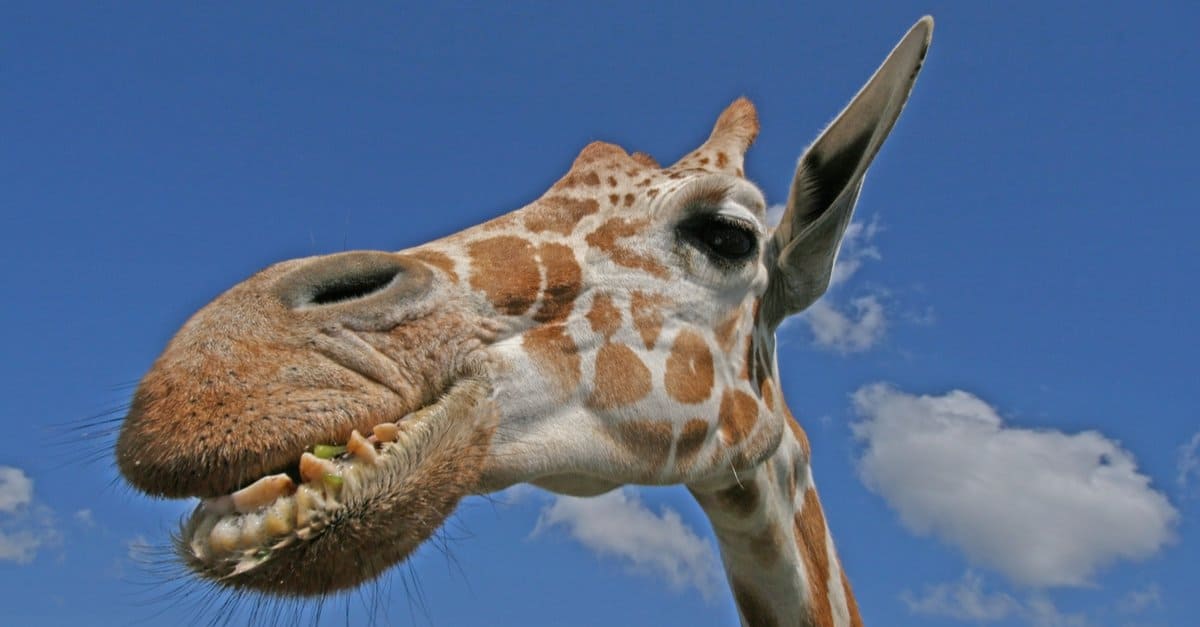
19. Giraffe
Giraffes are extraordinary animals. Their cardiovascular system alone, which must pump blood up a neck that can reach six feet long, is an engineering achievement. Their intellect is less remarkable.
Giraffes have a relatively small brain compared to their towering body size, which limits their capacity for complex problem-solving. Their social groups are loose and frequently changing, unlike the stable, memory-dependent social structures seen in elephants and primates, suggesting lower social intelligence.
Their dietary preference also raises questions. Despite having access to a wide variety of vegetation, giraffes are strongly drawn to acacia leaves, which come with significant thorny defenses and moderate nutritional value. The stubbornness of this preference, even when easier food is available, is a recurring example of behavioral inflexibility cited by researchers.
20. Lilac-breasted Roller
The lilac-breasted roller may be the most beautiful bird on this list. It is one of Africa’s most photographed species, with plumage spanning seven distinct colors. Its decision-making, however, does not match its appearance.
The lilac-breasted roller is an apex predator of insects and small lizards in its environment. Yet despite this status, it nests in ground holes rather than elevated locations, exposing eggs and chicks to terrestrial predators that any bird nesting in a tree would simply not worry about.
Its mating display involves the male performing aerial dives and rolls, impressive visually but also conspicuous enough to attract the attention of predators looking for an easy meal. The male advertises himself dramatically at the exact moment when self-preservation would suggest subtlety.
In controlled settings, the lilac-breasted roller has also shown difficulty retrieving food from transparent containers, attempting to reach the item through the container’s sides rather than the open top, pointing to limited spatial reasoning.
A Fair Note on Animal Intelligence
Before you close this article feeling too superior, it is worth remembering that most current studies demonstrate that cognition and intelligence comprise a spectrum rather than a sharp divide between humans and other animals. Even invertebrates such as insects with relatively small brains show surprising mental capabilities, thereby challenging the myth of human exceptionalism.
Every animal on this list of “Dumbest Animals in the World ” is alive today, which means evolution has deemed their strategies survivable, at least for now. The kakapo, panda, and koala are struggling partly because of human-caused environmental change, not because nature judged them failures. What looks foolish in one context may be a perfectly functional adaptation in another.
That said, some animals do make choices that are very, very hard to defend.
FAQs: Dumbest Animals in the World
What is the dumbest animal in the world? No single animal holds the undisputed title, as intelligence is measured differently across species. However, animals like the ostrich, koala, and kakapo are frequently cited because their behaviors, brain-to-body ratios, or survival strategies reflect the least cognitive flexibility. The ostrich’s brain is literally smaller than each of its own eyeballs, making it a recurring top answer.
Why is the ostrich considered one of the dumbest animals? The ostrich has the largest eyes of any land animal, and its brain is smaller than either of them. This limited brain capacity translates into poor predator-evasion strategies, including running in circles and pressing its face against the ground. It also has limited social intelligence and inconsistent parenting behaviors.
Is the panda bear really one of the dumbest animals? The panda’s cognitive abilities are debated, but its survival strategy is genuinely puzzling. As a biological carnivore that has evolved to eat almost nothing but nutrient-poor bamboo, the panda must eat for up to 14 hours a day just to sustain itself. Combined with a near-complete lack of reproductive interest during the tiny window of female fertility, the panda’s survival without human intervention would be extremely uncertain.
Are kakapos really endangered because they are not smart enough to survive? Partly. The kakapo evolved without natural predators and never developed appropriate fear responses. When predators were introduced to New Zealand, the kakapo’s instinct to freeze and blend in was no match for animals that hunt by smell. Its extremely infrequent breeding cycle, which only triggers every two to four years, compounds the problem significantly. As of 2026, only 235 kakapos remain alive, all on predator-free islands under active conservation management.
Are any of the “dumb animal” stories actually myths? Yes, several. The idea that ostriches bury their heads in sand when scared is false. The belief that lemmings jump off cliffs in mass suicides was largely invented for a 1958 Disney documentary. And the perception that turkeys drown in the rain by staring upward is an exaggeration of a real but more limited neurological condition in certain domestic turkey breeds.
Do any of these animals show unexpected signs of intelligence? Yes. Giraffes have been found to communicate in ways scientists did not previously recognize, including through low-frequency humming. Koalas have a memory for specific trees. And the slow loris, despite its limited defenses, is the only venomous primate in the world, which represents a remarkable if dangerous evolutionary achievement.